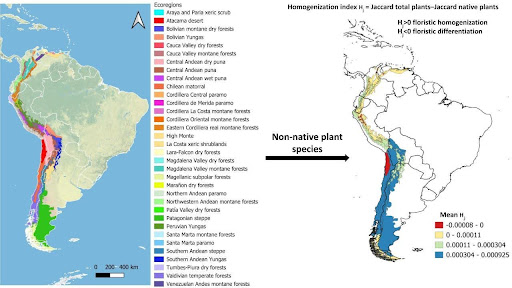
A new study published in Perspectives in Ecology and Conservation examines how
non-native plants are reshaping Andean flora across 34 ecoregions distributed
throughout the mountain system. This is the first assessment to evaluate, at the
ecoregional scale and across the full extent of the Andes, whether non-native species are
increasing or decreasing floristic similarity among regions.
The study analyzed 496 pairs of ecoregions and compared similarity patterns between
native and non-native plants using data from global databases (GBIF and GRIIS).
Results show that non-native species do not generate a single consistent pattern: in
37.7% of cases, homogenization was observed (greater similarity among ecoregions),
while 34.7% showed differentiation (greater floristic divergence). The remaining
comparisons exhibited no net change.
In addition to showing that floristic similarity declines with geographic and climatic
distance, the study demonstrates that political boundaries play a particularly important
role in shaping non-native floras. Differences in regulatory frameworks, trade dynamics,
and socio-political contexts among countries influence species introduction and
establishment processes, thereby affecting regional similarity patterns.
These findings provide new insights into how biogeographic and socio-political factors
interact in the reconfiguration of Andean biodiversity, one of the world’s major
biodiversity hotspots. The study highlights the need to strengthen coordinated,
transnational management and conservation strategies to address the challenges posed
by biological invasions in the region.