PAPER
Measuring the Invisible Map: IER Researchers Validate Tools to Study Magnetism and Honey Bees
An interdisciplinary team from the Instituto de Ecología Regional (IER) successfully evaluated different technologies for measuring the intensity of the Earth's magnetic field in areas where honey bees congregate, identifying a low-cost magnetometer as the most effective tool for these studies.
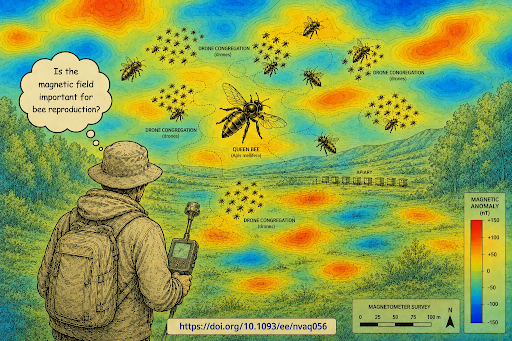


Have you ever tried to navigate in an unknown place without a GPS signal on your phone? For honey bees (Apis mellifera), this “GPS” does not rely on satellites but on the Earth's magnetic field. Thanks to tiny grains of magnetite located in their abdomen, bees can detect extremely subtle magnetic variations, using them as a biological compass to locate their gathering sites, known as Drone Congregation Areas (DCAs).
A major scientific challenge has been: how can we measure what bees naturally perceive?
Researchers from the Instituto de Ecología Regional (IER – CONICET/UNT), including Harold Pulido-Guarín, Ana Carolina Monmany-Garzia, and Alberto Galindo-Cardona, set out to address this technical question. Their primary objective was not only to study honey bees but also to evaluate how to measure magnetic fields in the most accurate and cost-effective way under field conditions.
Accessible Science: Mobile Applications versus Specialized Instruments
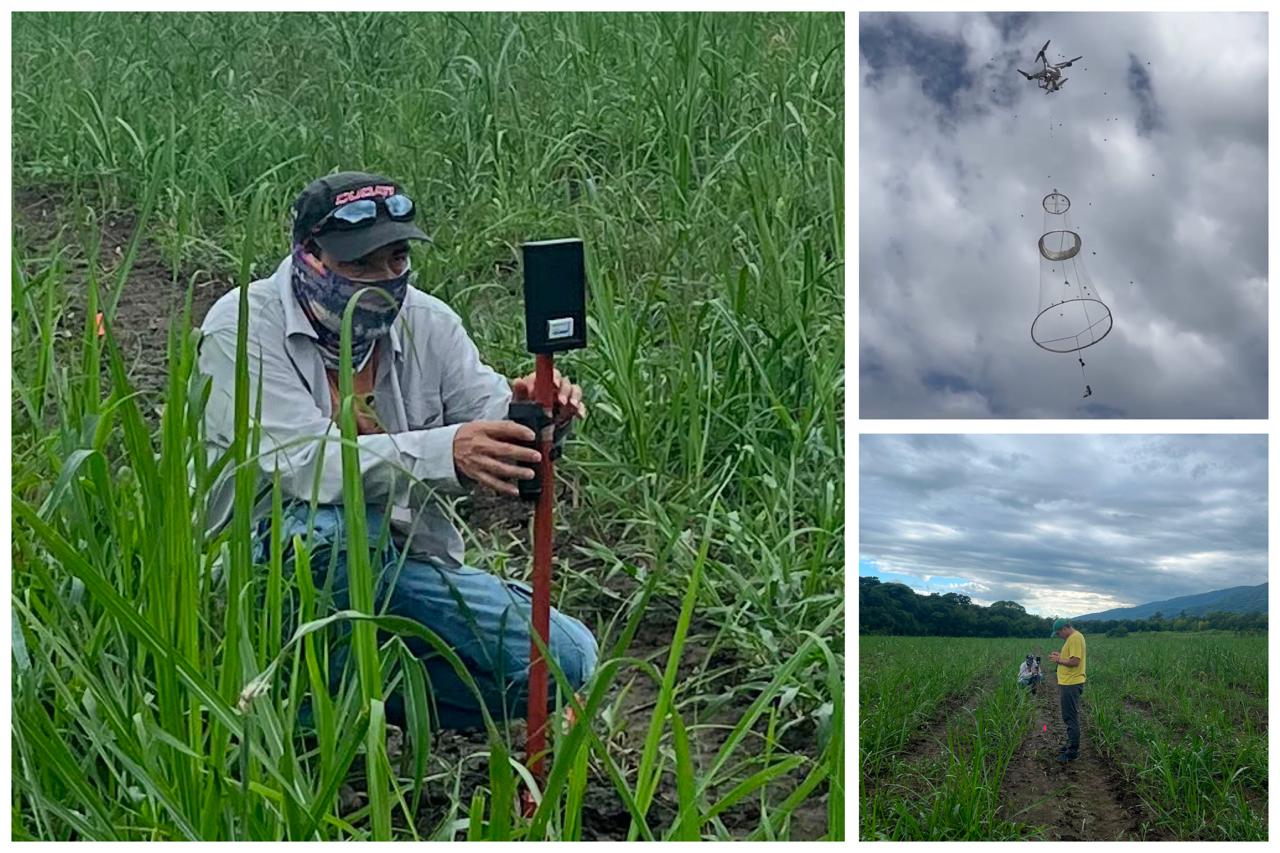
The research team compared three methods across different locations in Tucumán:
- Two free mobile applications (CrowdMag and Phyphox) that use the magnetic sensors integrated into smartphones.
- A low-cost magnetometer (MC), a device specifically designed to detect local magnetic field variations.
The findings provide valuable guidance for future research. Although smartphone applications proved useful for detecting broad magnetic variations and offered ease of use, the MC magnetometer emerged as the most reliable and consistent tool. This instrument successfully detected subtle differences in magnetic field intensity associated with both time of day and sampling height (measurements taken at 10 cm and 150 cm above ground level), patterns that smartphone applications were not always able to capture due to signal interference, nearby electrical infrastructure, or internet connectivity limitations.
Why Does Accurate Measurement Matter?
Precisely characterizing the magnetic signals present at a given location can help explain why honey bees repeatedly select specific sites for congregation and mating year after year. The work conducted by researchers at the IER demonstrates that we now have access to a methods and technology that are both affordable and robust enough to reveal the “invisible map” that guides these important pollinators.
By improving our ability to quantify environmental magnetic fields, we not only advance fundamental scientific knowledge, also generate practical tools that may contribute to the management and conservation of honey bee colonies, upon which a substantial proportion of global food production depends.
For a detailed description of the methods and results obtained in this study, readers are encouraged to consult the full publication.
Reference
Pulido-Guarín, H., Monmany-Garzia, A. C., Scannapieco, A. C., Ramírez-Mejía, A. F., Geria, M., & Galindo-Cardona, A. (2026). Three methods for measuring the Earth’s magnetic field intensity in Apis mellifera (Hymenoptera: Apidae) drone congregation areas. Environmental Entomology.